A good hybrid broadcast treats the remote audience as a real segment, not a webcam pointed at the stage.
A good hybrid broadcast treats the remote audience as a genuine segment of the event, not an afterthought served by a single webcam pointed vaguely at the stage. That distinction shapes almost every production decision, from camera count to how the run of show is scripted.
Camera setup for coverage, not just documentation
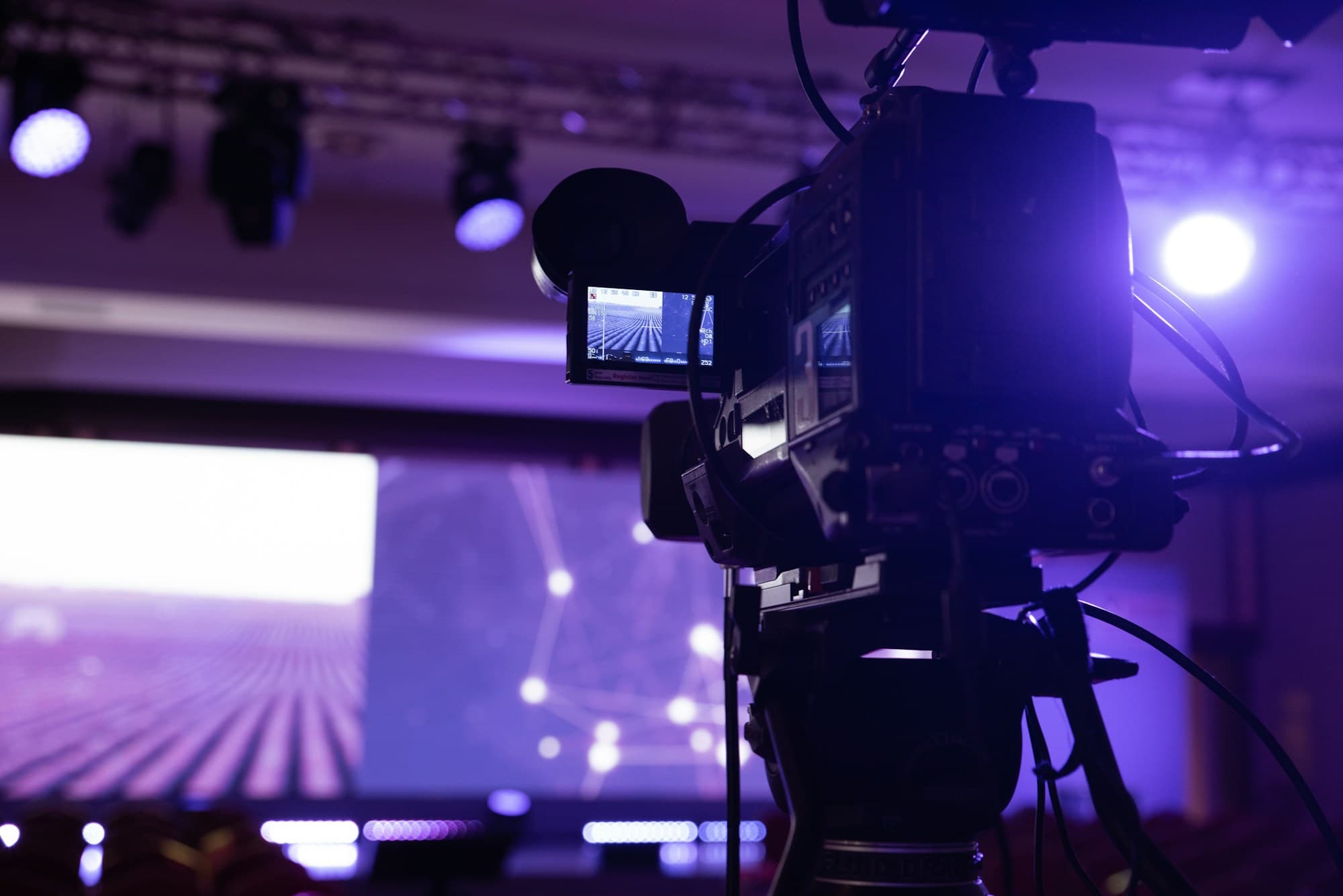
Multi-camera coverage — a wide stage shot, a close presenter shot, and a dedicated slide/content feed — reads far better remotely than a single static angle. Camera switching should follow the content, cutting to slides or audience reaction at the moments that matter, the way a broadcast director would.
Audio mixing is where most hybrid streams fail
In-room sound and stream audio are different engineering problems — a mix that sounds fine in the room can be unintelligible on a laptop speaker if it isn't specifically balanced for the stream feed. A dedicated stream audio mix, separate from the house PA feed, is standard practice for serious hybrid production.
Give remote attendees something to do
Live chat moderation, polling and a visible way to submit questions keep remote attendees engaged rather than passively watching — and surfacing a remote question on the main screen occasionally signals to that audience that they're genuinely part of the room.
Test the full pipeline before the event, not just the camera
Bandwidth, encoder settings and the streaming platform itself all need to be tested under realistic load — the most common hybrid-event failure isn't the camera or the mic, it's an untested internet connection or streaming pipeline breaking mid-event.